
From the outside, high-achieving realtors look successful, driven, and resilient. They close deals consistently, stay visible, and push through challenges others avoid. But beneath that success, many are quietly battling real estate burnout, not because they’re failing, but because they don’t know how to stop.
The ability to keep going often becomes the very thing that causes collapse.
Why Real Estate Agents Experience Burnout
Burnout in real estate rarely comes from one bad month. It builds gradually under constant pressure, emotional labor, and performance-based income.
The stress of being a real estate agent includes unpredictable schedules, client urgency, financial uncertainty, and the pressure to always be available. Over time, this level of demand leads to burnout in real estate professionals, even those who love their work.
For high performers, burnout is often delayed, but deeper when it arrives.
The High-Achiever Trap
High achievers are wired to push. They equate rest with falling behind and slowing down with losing momentum. This is where workaholic tendencies often take root.
Instead of listening to fatigue, high performers override it. They rely on adrenaline and discipline, ignoring the early warning signs of real estate burnout until the body forces a stop. And that is how your nervous system holds the key to chronic pain and abundance.
This pattern is common in high achieving professionals burnout, where success masks strain until it becomes impossible to ignore.
The Nervous System Cost of Always “On”
What many realtors don’t realize is that burnout isn’t just mental, it’s physiological.
Constant urgency keeps the body in fight-or-flight. Over time, this leads to nervous system burnout, where the body loses its ability to recover, regulate stress, or fully rest.
With nervous system burnout, even time off doesn’t feel restorative. Sleep doesn’t refresh you. Motivation fades. Focus drops. This is a major reason burnout in real estate professionals can feel so hard to reverse.
Why High Achievers Struggle to Rest
High achievers don’t struggle to rest because they don’t want to, they struggle because rest feels unsafe.
Slowing down can trigger anxiety, guilt, or fear of losing control. This is especially true in commission-based careers, where income is directly tied to output.
Realtor stress isn’t just about workload, it’s about responsibility. And for many, stillness feels more uncomfortable than exhaustion.
Can Commission-Based Work Cause Chronic Stress?
Yes. Commission-based work creates ongoing pressure that keeps the nervous system activated.
The uncertainty of deals, timelines, and income reinforces realtor stress and increases the risk of burnout in real estate professionals. When there’s no guaranteed “off,” the body never fully powers down.
Over time, this chronic activation contributes directly to high achieving professionals burnout.
Signs of Burnout in Realtors
Burnout doesn’t always look like collapse. Often, it shows up as:
- Emotional numbness toward work
- Increased irritability or impatience
- Difficulty relaxing, even during time off
- Trouble sleeping despite exhaustion
- Loss of joy or motivation
These are not weaknesses, they’re signals. And ignoring them accelerates real estate burnout rather than preventing it.
How Do You Recover From Professional Burnout?
Recovery starts by addressing the nervous system, not just the schedule.
To reverse nervous system burnout, realtors need more than time off—they need regulation. This includes:
- Creating intentional pauses during the workday
- Reducing constant urgency where possible
- Learning to separate self-worth from productivity
- Allowing the body to exit survival mode
Without this, rest becomes superficial, and burnout in real estate professionals continues to cycle.
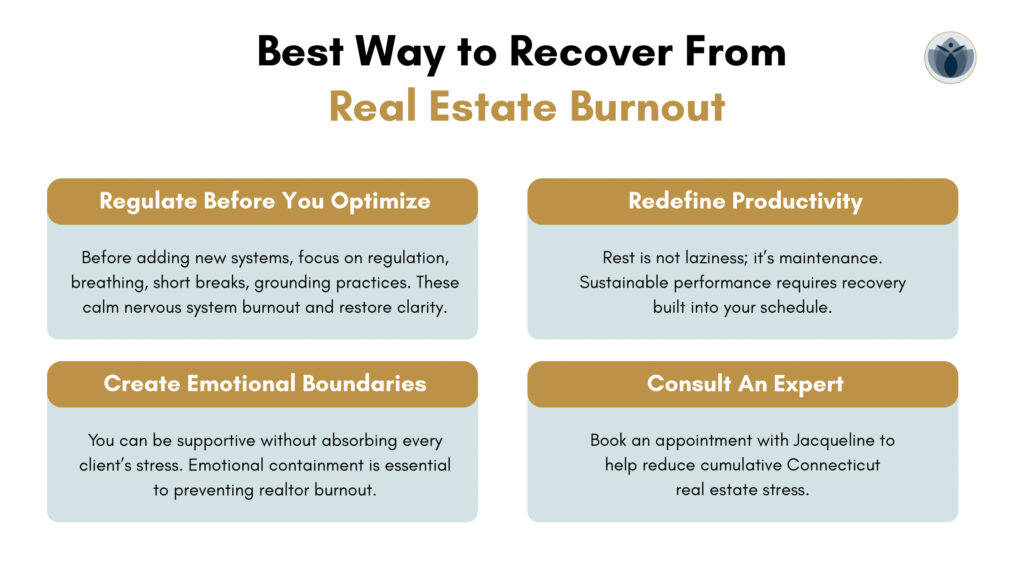
For professionals who notice burnout showing up physically, especially as tension or pain, support that works with both the body and nervous system can be especially effective. This is where Happy Low Back with Jacqueline. Kane is designed to help, addressing the physical impact of stress while supporting deeper nervous system recovery.
What It’s Really Costing You
Unchecked burnout doesn’t just affect performance. It impacts health, relationships, decision-making, and long-term career sustainability.
Many high performers don’t realize the cost until their energy, clarity, or passion is gone. High achieving professionals burnout doesn’t happen because people aren’t capable, it happens because they’re carrying too much for too long.
Final Thoughts
Struggling to slow down isn’t a personal flaw, it’s a conditioned response to pressure, responsibility, and success.
By recognizing workaholic tendencies, addressing realtor stress, and understanding nervous system burnout, high-achieving realtors can protect what they’ve built without burning themselves out in the process.
Success shouldn’t come at the cost of your health. Sustainability is the real achievement.
If you’re tired of winning at work and losing everywhere else, Jacqueline’s private coaching is designed for high achievers ready to break the burnout cycle. Together, you’ll identify where stuck energy in the body is holding you back, release patterns driving your workaholic tendencies, and create a personalized approach to energetic alignment that lets you perform at your peak without sacrificing your health or happiness. Book a free discovery call to learn how.
FAQs
Why do real estate agents experience burnout?
The combination of unpredictable hours, constant client demands, emotional investment in deals, commission-based financial pressure, and the inability to mentally disconnect creates a perfect storm.
How do you recover from professional burnout?
Recovery starts with nervous system regulation, not just time off. Begin with small pauses throughout the day to check in with your body. Set firm boundaries around availability.
Why do high achievers struggle to rest?
High achievers often intertwine their identity with productivity. Rest feels like failure, and stopping triggers anxiety about falling behind.
Can commission-based work cause chronic stress?
Absolutely. Commission pay creates financial unpredictability that keeps the nervous system in a state of vigilance.
What are signs of burnout in realtors?
Look for emotional numbness after wins, irritability with loved ones, feeling overwhelmed by simple tasks, inability to be present, physical symptoms like tension and lower back pain, and a persistent sense of dread about work.