
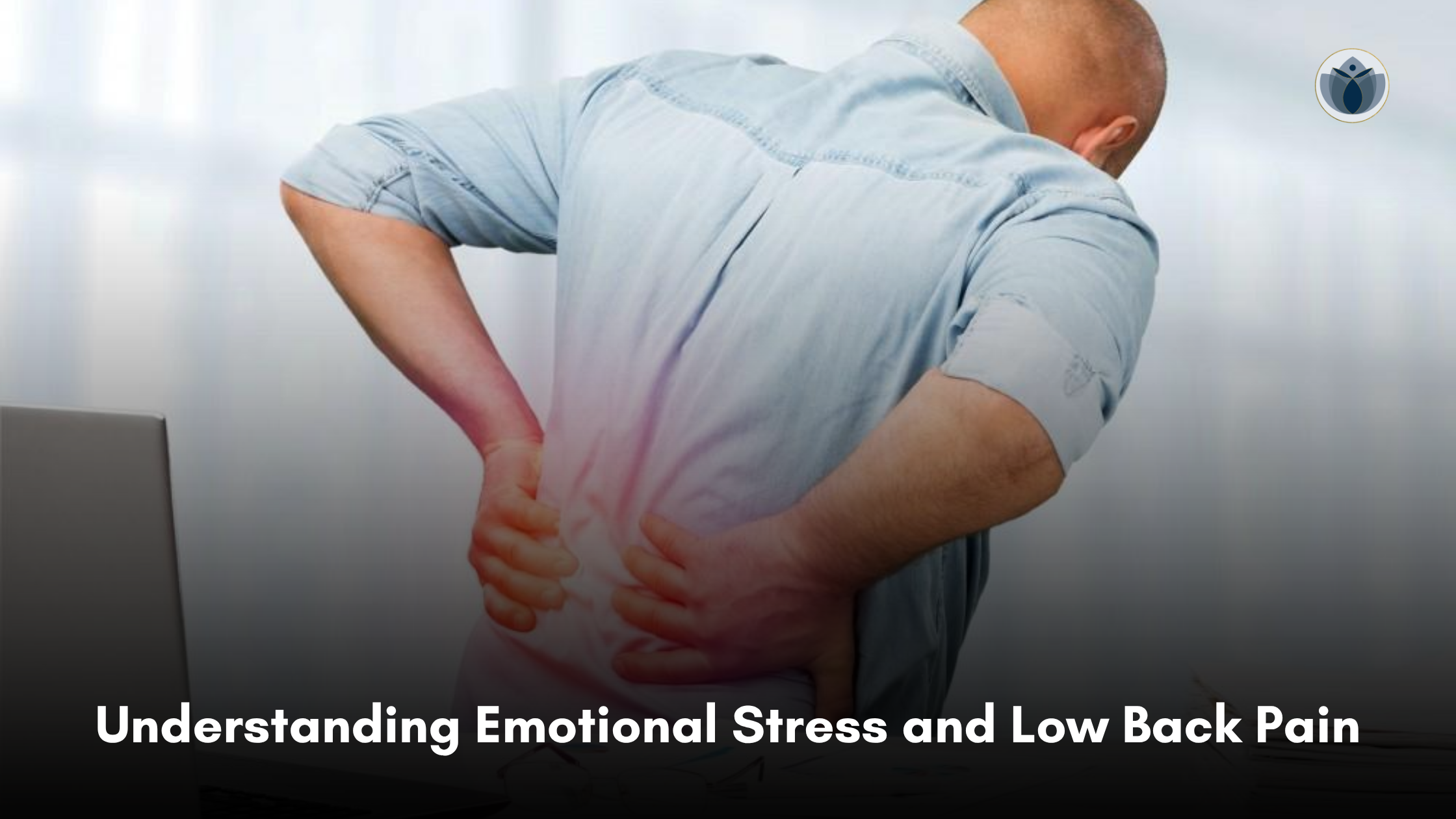
Your lower back does more than carry your body through the day.
It can also become a place where tension, pressure, and unprocessed emotions show up physically.
Maybe you’ve noticed it yourself. You have a stressful conversation, a demanding week, or a period when everything feels like “too much,” and suddenly your back feels tighter. You stretch. You rest. You try to ignore it. Then the pain returns.
What if your back isn’t simply asking for another stretch?
What if it’s asking you to pay attention to what else is happening in your life?
The connection between Emotional Stress and Low Back Pain is something many people don’t hear enough about. Understanding that connection can change the way you approach healing.
What Does Emotional Stress Have to Do With Your Back?
Your body and mind aren’t separate systems. They’re constantly communicating through your nervous system.
When you experience Emotional Stress, your body can move into a heightened state of alert. Your muscles may tighten, your breathing may become shallow, your heart rate can increase, and your body becomes more focused on responding to the perceived threat.
If that stress continues for days, weeks, or months, your muscles may remain tense for much longer than necessary.
Your lower back can become one of the places where that tension accumulates.
This doesn’t mean emotional stress is the only cause of back pain. Physical strain, posture, injuries, muscle weakness, and other conditions can contribute too. But emotional stress can influence how your body experiences and responds to pain. And that is why Jacqueline combines therapy and energy healing as a holistic approach to lower back pain.
How Does Emotional Stress Affect Lower Back Pain?
Think about the last time you were overwhelmed.
Did you notice yourself clenching your jaw? Raising your shoulders? Holding your breath?
Your lower back can respond in similar ways.
When stress keeps your body in a state of tension, the muscles around your spine may tighten. Over time, that can contribute to discomfort and make existing pain feel more intense.
This is why Emotional Stress and Low Back Pain can become a frustrating cycle:
Stress creates tension.
Tension contributes to discomfort.
Discomfort creates more worry.
And the cycle continues.
Addressing only the physical symptom may provide temporary back pain relief, while addressing the physical and emotional sides together may give you a more complete approach to healing.
What Role Does Emotional Well-Being Play in Chronic Lower Back Pain?
Emotional well-being doesn’t mean being happy all the time.
It means having healthy ways to process pressure, emotions, disappointment, uncertainty, and the everyday demands of life.
When you’re constantly pushing emotions aside, your body doesn’t necessarily get the message that everything is fine.
You may sleep poorly, move less, breathe differently, become more sensitive to discomfort, or carry constant muscle tension.
This is one reason emotional well-being can be an important part of managing chronic pain.
Instead of asking only, “What is wrong with my back?” it can also be useful to ask:
“What else has my body been carrying?”
How Does the Nervous System Connect Emotional Stress With Back Pain?
Your nervous system plays a major role in how your brain and body communicate.
When you feel safe and relaxed, your body can shift toward rest, recovery, and repair. When you’re under prolonged stress, your nervous system may remain more alert.
That heightened state can affect muscle tension and the way your brain processes pain signals.
This doesn’t mean pain is “all in your head.”
The pain is real.
It means your nervous system is part of the pain experience, and supporting your nervous system may be an important piece of lower back pain relief.
Gentle movement, breathing exercises, meditation, restorative sleep, bodywork, and emotional support can all help create conditions where your body feels safer enough to relax.
Why Does Your Body Sometimes Hold Stress in Your Lower Back?
There’s no single body part where everyone stores stress.
For some people, stress shows up as headaches. For others, it’s jaw tension, tight shoulders, digestive discomfort, or a clenched stomach.
For many people, the lower back becomes another area where tension is felt.
Your daily habits can reinforce this. Sitting for long periods, driving, working at a desk, lifting, or moving through the day while mentally overwhelmed can all add physical strain to an already stressed body.
That’s why how to fix back pain isn’t always about finding one magic exercise.
Sometimes healing requires looking at the whole picture.
What Should You Do When Stress and Back Pain Keep Meeting?
Start by becoming curious about your pain.
Notice when it appears.
Does it get worse during particularly stressful periods? Does it ease when you rest, spend time outdoors, move your body, or do something that genuinely relaxes you?
Keep moving gently rather than remaining completely still. Prioritize sleep. Take intentional breathing breaks. Give yourself space to process emotions instead of constantly pushing them aside.
And if you’re searching for lower back pain treatment or back pain treatment near me, consider looking beyond symptom management and exploring approaches that address your physical and emotional well-being together.
Professional support can also help determine whether your pain needs medical evaluation, physical therapy, bodywork, or another form of treatment.
Your Back May Be Asking for More Than a Quick Fix
Pain doesn’t always arrive with a simple explanation.
Sometimes the most useful question isn’t just, “How can I make this pain disappear?”
It’s also:
“What is my body experiencing, and what does it need from me?”
Jacqueline M. Kane Happy Low Back takes a holistic approach to low back pain, exploring the physical, emotional, and energetic patterns that may be connected to what you’re experiencing.90
Frequently Asked Questions
How Does Emotional Stress Affect Lower Back Pain?
Emotional stress can cause prolonged muscle tension and influence how the nervous system processes pain. This can contribute to or intensify existing lower back discomfort.
What Role Does Emotional Well-Being Play in Chronic Lower Back Pain?
Emotional well-being can influence sleep, muscle tension, stress responses, movement, and pain sensitivity. Supporting emotional health can therefore be an important part of a comprehensive approach to chronic pain.
How Does the Nervous System Connect Emotional Stress With Back Pain?
The nervous system communicates between the brain and body. Prolonged stress can keep the body in a heightened state of alert, which may increase muscle tension and influence how pain signals are experienced.
What Is the Connection Between Stress, Emotions, and Low Back Pain?
Stress and emotions can affect muscle tension and nervous-system activity, while ongoing pain can create additional emotional stress. Understanding both sides can help break this cycle.
Why Does Your Body Sometimes Hold Stress in Your Lower Back?
Everyone experiences stress differently. For some people, prolonged stress may contribute to tension in the lower back, especially when combined with prolonged sitting, physical strain, poor recovery, or other factors.