

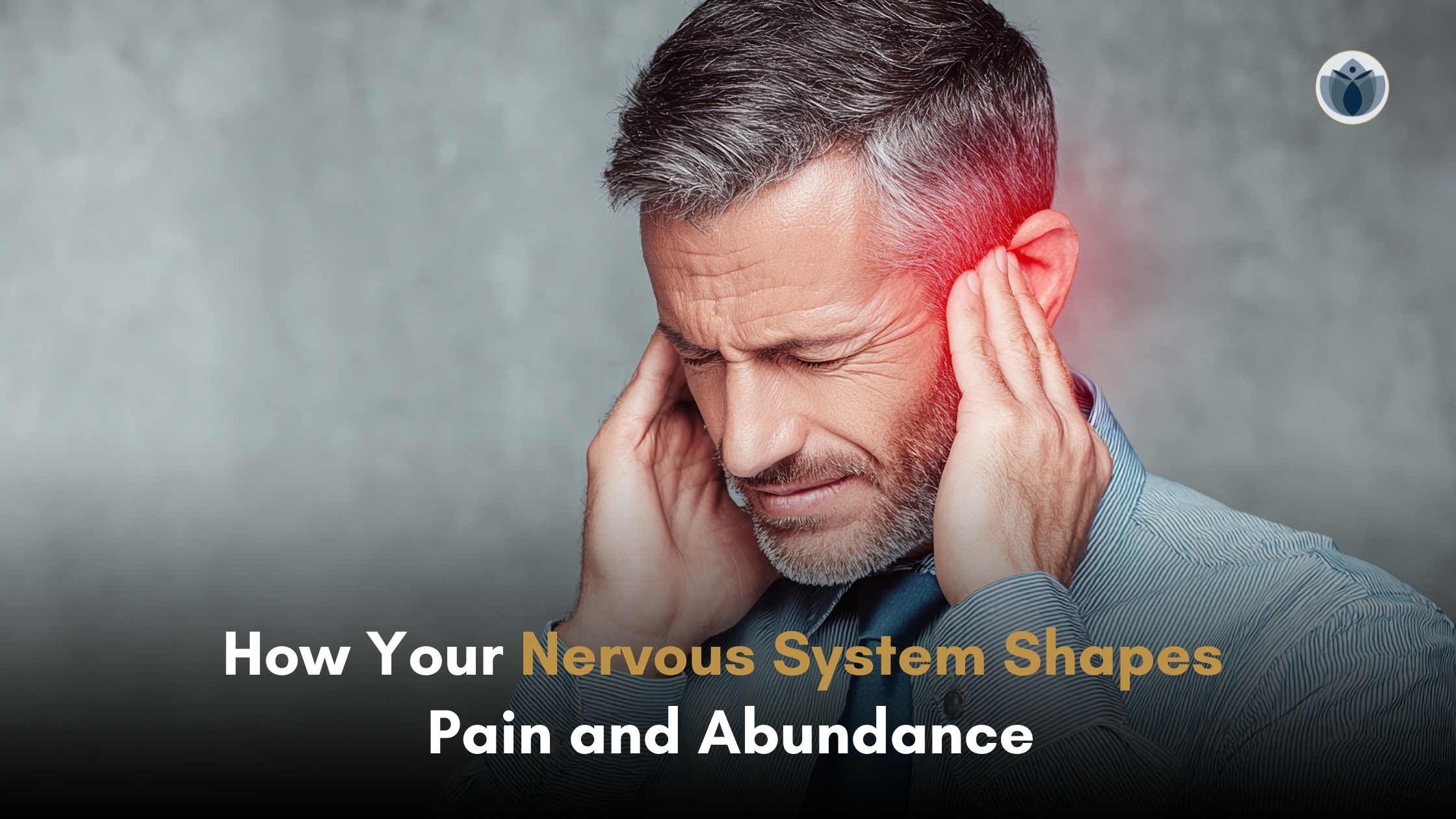
Have you ever noticed how pain seems to flare up during stressful seasons of your life? Or how no matter how hard you work, abundance feels just out of reach when your body feels tense, exhausted, or overwhelmed?
This is not a coincidence.
At the center of both chronic pain and your capacity to experience ease, joy, and soul abundance lies one powerful system: your nervous system.
Understanding how nervous system regulation works can completely transform the way you approach pain management, healing, and even how you receive abundance in your life.
The Nervous System: Your Body’s Control Center
Your nervous system’s main job is to keep you safe. When it perceives danger, whether physical, emotional, or psychological, it activates fight or flight mode.
In small doses, this response is helpful. But when stress becomes chronic, your body stays stuck in survival mode. This is where problems begin.
A constantly activated fight or flight response tightens muscles, increases inflammation, and reduces blood flow to areas like the lower back, one of the reasons chronic back pain is so common among people under prolonged stress.
Over time, trauma stored in the body accumulates, creating pain patterns that don’t respond well to traditional treatments alone.
How Stress Turns Into Chronic Pain
Stress doesn’t just live in your mind, it lives in your body.
When your nervous system is dysregulated, your muscles remain contracted, your breathing becomes shallow, and your pain threshold lowers. This is why stress relief is a foundational part of long-term pain management.
Research in mind-body healing shows that unresolved emotional stress often manifests physically, especially in areas like the neck, shoulders, and lower back. This explains why so many people experience chronic back pain during emotionally demanding periods.
Without addressing nervous system regulation, pain relief often becomes temporary instead of lasting.
Trauma Stored in the Body and Somatic Healing
Your body remembers what your mind may have forgotten. And that is why chronic pain returns, and here is how to finally heal the root.
Unprocessed stress and trauma become trauma stored in the body, showing up as tension, pain, fatigue, or even autoimmune symptoms. This is where somatic healing becomes essential.
Somatic healing focuses on listening to the body rather than forcing it to “push through.” It teaches the nervous system that it is safe again.
Practices such as breathwork, gentle movement, and EFT Tapping help release stored stress and guide the body toward a true nervous system reset.
EFT Tapping and Nervous System Reset
EFT Tapping is one of the most effective tools for calming the nervous system quickly.
By tapping on specific acupressure points while acknowledging emotional stress, you send safety signals to the brain. This reduces cortisol levels and shifts the body out of fight or flight.
Regular EFT Tapping supports stress relief, improves emotional resilience, and plays a powerful role in long-term pain management, especially for those dealing with chronic pain.
Many people report that consistent tapping creates a noticeable nervous system reset, allowing the body to heal rather than stay stuck in survival.
Chronic Pain and Abundance: The Hidden Connection
You may wonder, what does pain have to do with abundance?
Everything.
A dysregulated nervous system focuses on survival, not expansion. When your body feels unsafe, it limits your ability to receive opportunities, rest, creativity, and even financial flow.
A calm nervous system, on the other hand, creates space for soul abundance, the kind of abundance that includes health, peace, fulfillment, and ease.
This is why nervous system regulation isn’t just about healing pain; it’s about opening yourself to more of life.
When your body feels safe, your mind becomes clearer, your decisions improve, and abundance flows more naturally.
Simple Daily Practices for Nervous System Regulation
You don’t need hours of meditation to support healing. Small, consistent actions can create profound change.
Here are a few simple tools:
- Deep belly breathing for 60 seconds
- Gentle stretching to release chronic back pain
- Short EFT Tapping sessions
- Grounding exercises like placing your feet on the floor and noticing your surroundings
- Intentional stress relief breaks during the day
These practices gently guide your body toward nervous system regulation and long-term mind-body healing.
Healing Is Not About Forcing, It’s About Safety
True healing begins when your body feels safe enough to let go.
By focusing on somatic healing, addressing trauma stored in the body, and prioritizing a daily nervous system reset, you create an environment where pain can soften and abundance can grow.
Your nervous system isn’t working against you, it’s asking for support.
And when you give it that support, both your body and your life can change in ways you never imagined.
Jacqueline’s massage work supports this listening, helping the body feel safe enough to release and begin 2026 not with resolutions, but with revelation.
Frequently Asked Questions (FAQs)
What are the 5 signs of a dysregulated nervous system?
Common signs include chronic fatigue, anxiety, muscle tension, digestive issues, and persistent chronic pain such as chronic back pain.
How do I reset my nervous system in 2 minutes?
Slow breathing combined with EFT Tapping or grounding exercises can initiate a quick nervous system reset and reduce fight or flight activation.
Can a calm nervous system increase abundance?
Yes. A regulated nervous system allows your body to feel safe, which supports clarity, creativity, confidence, and the ability to receive soul abundance.
Why do I feel “wired but tired”?
This sensation occurs when your nervous system is stuck in fight or flight, producing stress hormones even when your body is exhausted.
Why does my back hurt when I’m stressed?
Stress tightens muscles and reduces circulation, contributing to chronic back pain and inflammation.
How does stress cause physical back pain?
Ongoing stress keeps the nervous system activated, preventing muscles from relaxing and contributing to long-term chronic pain.
What are the signs of a dysregulated nervous system?
Signs include emotional overwhelm, poor sleep, heightened pain sensitivity, difficulty relaxing, and persistent stress despite rest.