

If you’ve had X-rays, MRIs, or other scans that came back “normal,” yet you’re still living with chronic lower back pain, this is for you. Many people experience persistent pain despite medical tests showing no obvious injury or structural problem.
This can be frustrating and even discouraging. You may begin to question whether your pain is real. It is… even when imaging doesn’t reveal a clear physical cause.
Understanding the possible chronic lower back pain causes can help you move beyond frustration and toward meaningful healing.
When Medical Tests Don’t Tell the Whole Story
Medical imaging is excellent at identifying fractures, severe disc damage, infections, or tumors. However, sometimes it is much more complex than what appears on a scan.
Research has shown that pain is influenced not only by muscles and joints but also by the brain, nervous system, stress levels, emotions, and past experiences. This means someone can have severe pain with a normal MRI, while another person may have significant spinal changes and experience little or no pain.
If your doctor has ruled out serious medical conditions, it may be time to explore the deeper factors contributing to why your chronic pain returns, and how to finally heal the root.
Common Chronic Lower Back Pain Causes Beyond Structural Damage
Several factors may contribute to ongoing pain even when tests are normal.
1. A Dysregulated Nervous System
Long-term stress can keep your nervous system in a constant state of alert. When this happens, the brain becomes more sensitive to pain signals.
The muscles around the lower back may remain tense, making everyday movements feel painful.
2. Emotional Stress and Unprocessed Emotions
Many people carry emotional burdens in their bodies without realizing it.
Work pressure, grief, trauma, relationship difficulties, caregiving responsibilities, or chronic anxiety can all increase physical tension and pain sensitivity. These emotional factors are often overlooked, but can be significant causes of chronic lower back pain.
3. Central Sensitization
Over time, the nervous system can become overprotective. This process, known as central sensitization, causes the brain to continue producing pain even after tissues have healed.
The pain isn’t imaginary; it’s the nervous system remaining stuck in a protective mode.
Recognizing Chronic Lower Back Pain Symptoms
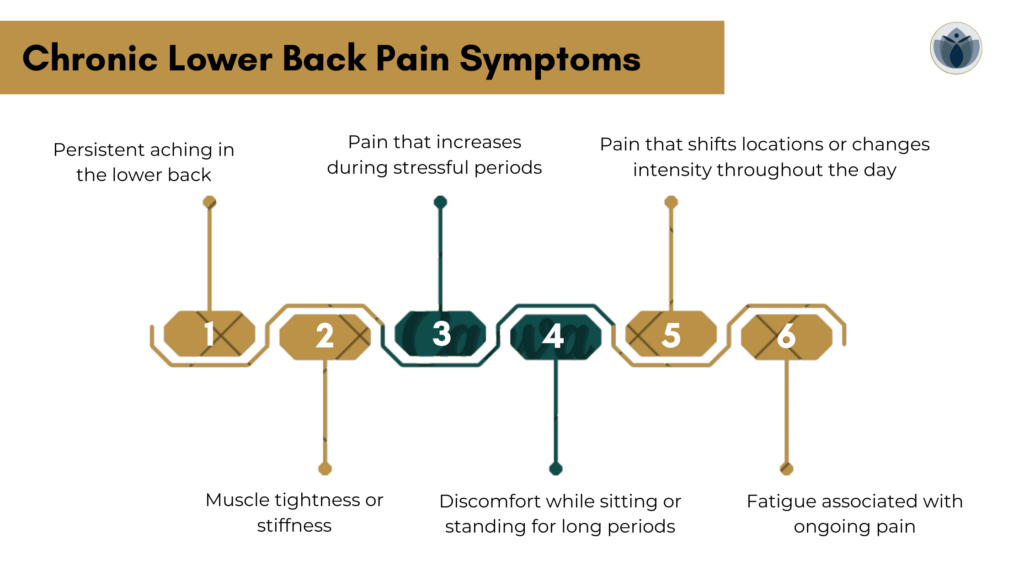
Everyone experiences pain differently, but common chronic lower back pain symptoms include:
- Persistent aching in the lower back
- Muscle tightness or stiffness
- Pain that increases during stressful periods
- Discomfort while sitting or standing for long periods
- Pain that shifts locations or changes intensity throughout the day
- Fatigue associated with ongoing pain
If these symptoms persist, it’s important to work with qualified healthcare professionals who can evaluate both physical and emotional contributors.
Chronic Lower Back Pain Treatment: A Whole-Person Approach
Effective chronic lower back pain treatment often combines physical care with nervous system regulation and emotional healing.
Your treatment plan may include:
- Physical therapy and gentle movement
- Stress management techniques
- Mindfulness and breathing exercises
- Cognitive Behavioral Therapy (CBT)
- Emotional processing approaches
- EFT (Emotional Freedom Techniques) Tapping
- Adequate sleep and healthy lifestyle habits
Rather than focusing only on the spine, this approach addresses the entire mind-body connection.
How EFT Tapping May Help
EFT Tapping combines gentle tapping on acupressure points with focused attention on emotions, stress, and physical discomfort.
While more research continues to emerge, many individuals report that EFT helps reduce emotional stress, calm the nervous system, and decrease pain intensity.
For people whose back pain worsens during stressful periods, nervous system regulation may become an important part of recovery.
Finding Support Beyond Physical Treatment
Living with persistent pain often affects emotional well-being. Anxiety, fear of movement, and isolation frequently accompany chronic pain.
Some people benefit from joining online anxiety support groups, for example, Healing Circle, where they can connect with others facing similar challenges from the comfort of home.
Others may prefer social anxiety support programs that help reduce the fear of interacting with others while managing chronic health conditions.
But if you’re looking for an in-person connection, then Jacqueline’s private coaching helps you by combining medical care with nervous system regulation, emotional healing, and supportive therapies to give you lasting relief and regained confidence in your body.
Remember, your pain is real, and you deserve compassionate care that addresses every part of your healing journey.
Frequently Asked Questions
What causes chronic lower back pain?
Common causes include muscle strain, poor posture, stress, nervous system sensitization, emotional trauma, arthritis, and spinal conditions. Sometimes multiple factors contribute even when imaging appears normal.
How to get rid of chronic lower back pain?
Recovery often involves regular movement, physical therapy, stress reduction, good sleep, healthy habits, and therapies that regulate the nervous system, such as mindfulness or EFT Tapping.
How to fix chronic lower back pain?
The best approach is identifying the underlying contributors rather than treating symptoms alone. A personalized plan that addresses both physical and emotional health is often most effective.
How to cure chronic lower back pain?
There is no universal cure because every person’s pain is different. However, many individuals experience significant improvement through a combination of medical care, movement, emotional healing, and lifestyle changes.
How to treat chronic lower back pain?
Treatment may include physical therapy, exercise, medications when appropriate, cognitive behavioral therapy, stress management, and complementary therapies such as EFT Tapping.
Can you get an emotional support animal for anxiety?
Yes. If a licensed mental health professional determines that an emotional support animal is appropriate for your anxiety, they may provide the necessary documentation.